People often say vitamin D deficiency is common in the UK, but they don’t always explain why – or what you can actually do about it.
Because of our northern latitude, seasonal sunshine and increasingly indoor lifestyles, many people don’t make enough vitamin D throughout the year. That doesn’t mean everyone is deficient, but it helps explain why vitamin D supplementation is commonly considered in the UK.
Vitamin D plays an important role in normal immune function, maintaining healthy bones and teeth, and helping the body absorb and use calcium. If you spend most daylight hours indoors, regularly cover your skin outdoors or have darker skin, it’s worth understanding what affects vitamin D production and whether supplementation may suit you.
Is vitamin D deficiency common in the UK?
Vitamin D deficiency is one of the most common nutrient deficiencies in the UK. Unlike many vitamins, your body makes most of its vitamin D when your skin is exposed to sunlight.
The challenge is that the UK doesn’t get reliable UVB sunlight throughout the year. Even during brighter months, many of us still spend a large part of the day indoors.
Your vitamin D levels also need maintaining over time, so getting more sunshine during summer doesn’t necessarily cover you for the entire year.
Why is vitamin D deficiency so common in the UK?

There isn’t one single reason behind low vitamin D in the UK, but our location and seasonal sunlight are major factors. For much of the year, UVB sunlight isn’t reliable enough for the body to produce vitamin D in the same way it can during brighter months.
Modern life can reduce exposure even further. Common factors include:
- Spending most of the day indoors
- Covering much of your skin outdoors
- Eating relatively few foods rich in vitamin D
Skin tone also matters. Higher levels of melanin mean more sun exposure may be needed to produce the same amount of vitamin D, which is one reason low vitamin D is more common in some ethnic groups in the UK.
Age can also play a part, as older adults may become less efficient at producing vitamin D from sunlight and may spend less time outdoors.
What are the signs of low vitamin D?
One of the reasons low vitamin D can be difficult to spot is that possible symptoms are often vague and non-specific.
Some people with low vitamin D don’t notice any symptoms. Others might experience tiredness, muscle weakness or general aches and pains, but those symptoms can have many other causes.
Don’t diagnose vitamin D deficiency from symptoms alone. It’s more useful to consider your overall risk factors, and ongoing or unexplained symptoms should be discussed with your GP.
Think about factors such as how much daylight you’re exposed to, how much skin is usually uncovered outdoors, your age and your skin tone.
If you’re worried about ongoing symptoms or suspect low vitamin D, speak to your GP, who may recommend a blood test if appropriate.
Who is most at risk of low vitamin D?
Anyone can develop low vitamin D, but some people are more likely to struggle with maintaining healthy levels because sunlight is the main way our bodies produce it.
You may be at higher risk if you:
- Spend very little time outdoors during sunny periods
- Regularly wear clothing that covers most of your skin
- Have darker skin with higher levels of melanin
- Are housebound, even temporarily
- Eat relatively few foods naturally rich in vitamin D
Being physically active doesn’t automatically protect you from low vitamin D either. Plenty of gym-goers train before work, after dark or indoors for most of the year.
Why is vitamin D3 often paired with K2?
If you’ve been shopping for supplements, you’ve probably noticed that vitamin D3 and K2 are often included together.
Although they’re different nutrients, they’re commonly paired because they both have roles in maintaining normal bone health.

Vitamin D helps the body absorb and use calcium and contributes to the maintenance of normal bones and teeth. Vitamin K also contributes to the maintenance of normal bones.
That doesn’t mean everyone needs K2 alongside vitamin D3. Some people simply prefer a combined supplement because it provides both nutrients in one daily serving.
The main priority is not to overcomplicate things: if sunlight isn’t reliably meeting your vitamin D needs, consistency matters more than building an unnecessarily complicated supplement routine.
How much vitamin D should you take in the UK?
UK guidance is useful here. The NHS advises that adults and children over one year old should consider 10 micrograms (400 IU) of vitamin D daily during autumn and winter, typically from October to early March.

Some people with very limited sun exposure or a higher risk of deficiency may be advised to take vitamin D throughout the year.
Unless a healthcare professional has advised otherwise, taking substantially more than you need isn’t necessarily better.
Prefer to keep it simple?
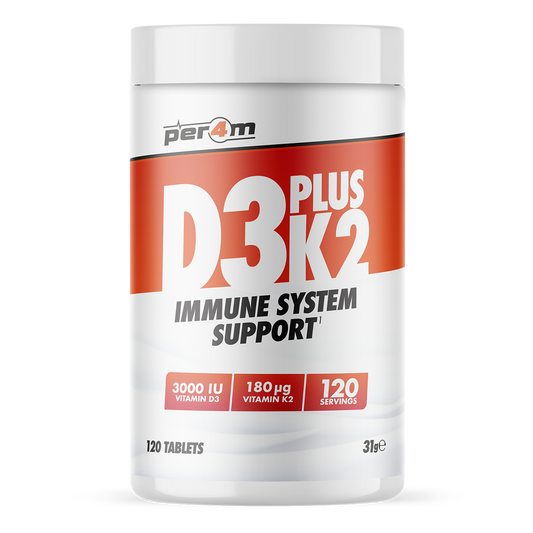
If vitamin D supplementation makes sense for your routine, Per4m Vitamin D3 + K2 combines both nutrients in one straightforward daily supplement.
When should you speak to your GP about vitamin D?
For many healthy adults, a daily vitamin D supplement is a straightforward way to support vitamin D intake, but supplements aren’t the answer to every symptom.
If you have ongoing muscle weakness, persistent bone pain, unexplained fatigue or symptoms that aren’t improving, it’s worth speaking to your GP rather than assuming vitamin D is the cause.
It’s also sensible to seek personalised advice if you have a medical condition that affects nutrient absorption, kidney disease or another long-term health condition.
In some cases a blood test may be appropriate to confirm vitamin D deficiency, but your GP can advise whether that’s necessary.
Should you take a vitamin D supplement in the UK?
Vitamin D might not be the most exciting supplement on the shelf, but for people in the UK who aren’t getting reliable vitamin D from sunlight, it can be one of the more straightforward additions to a daily routine.
Season, time spent outdoors, skin exposure, age and skin tone can all influence how reliable sunlight is as a source. The important thing is to look at your own circumstances rather than assume that everyone needs exactly the same approach.
If supplementation makes sense for you, Per4m Vitamin D3 + K2 provides both nutrients together in one convenient option. You can also read our guide to the top supplements for the winter months for more seasonal nutrition guidance.
Vitamin D3 + K2 in one daily supplement
A simple option for people looking to support their vitamin D intake without adding multiple separate products to their routine.
Like any supplement, vitamin D3 + K2 is designed to complement a balanced diet and healthy lifestyle rather than replace them. If you’re unsure whether vitamin D supplementation is appropriate for you, your GP is the best place to start.