There’s some confusion about cycling creatine and cycling pre-workout, so let’s talk about creatine breaks and caffeine in pre-workout. Supplement cycling gets used as a blanket rule, but different ingredients behave in different ways. Do you need to cycle creatine or pre-workouts?
- Creatine works by maintaining elevated muscle creatine stores – so consistency is important.
- Pre-workouts with caffeine produce an acute stimulant effect – so regular use can lead to tolerance.
So the quick answer is that creatine doesn’t need to be cycled (although some people do), but taking a break from a caffeinated pre-workout can make sense if you notice it getting less effective. For a longer answer, keep reading.
Where did the idea of supplement cycling come from?
Supplement cycling has become common advice because people often think the body will get used to a supplement, or that continuous use makes it stop working. But there isn’t one universal rule for all supplements. Whether or not you need to take a break depends on what the ingredient does, and how the body responds to repeated use.
Some supplements are actually designed around consistency (creatine is one of them) whereas others contain ingredients that can lead to tolerance (some pre-workouts fall into this category).
Do you need to cycle creatine?
There is generally no need to cycle creatine or take creatine breaks. Creatine works by increasing and maintaining creatine stores in muscles. It’s not a supplement that creates an acute, short-term response, and taking it consistently allows creatine stores to remain elevated. Stopping or cycling it doesn’t make it more effective, it just means you’ll have less creatine in your muscle stores.
You don’t need to take a break from creatine because you’ve been taking it for a while. In fact if you’re taking creatine for its established training benefits, consistency makes more sense than creatine cycling or taking a break.

Why has your pre-workout stopped working?
Pre-workout is a different conversation. We all know the frustrating feeling when your go-to pre-workout doesn’t give you the same feeling. But the likely explanation isn’t that your pre-workout has stopped working. If it contains caffeine, you may have become more tolerant to the caffeine ingredient.
Your response to caffeine can change with regular exposure. Caffeine works by blocking adenosine receptors, helping reduce the perception of tiredness. With repeated caffeine intake, the same dose might feel less noticeable over time. This doesn’t mean caffeine has become useless, just that the subjective effect is less obvious.
But feeling a pre-workout isn’t the same thing as it being effective. A good pre-workout will support your training without necessarily feeling strong.

How to reset caffeine tolerance and how long to deload caffeine?
Caffeine tolerance can be influenced by how much caffeine you consume, how often you consume it, and whether you’re getting caffeine from coffee, tea, energy drinks etc as well as from pre-workout. Individual caffeine sensitivity plays a part too.
There’s no single scientifically established caffeine reset that will work for everyone. Reducing or avoiding caffeine for a period of time can help but the timeline will vary.
Taking a break from pre-workout can help reset your caffeine tolerance, but if the aim is reducing your caffeine intake then remember to also look at other sources of caffeine (coffee, tea, energy drinks, fizzy drinks, even hot chocolate!)
People who consume a lot of caffeine can experience withdrawal symptoms if they suddenly stop, so try a gradual reduction instead.
How to do a caffeine deload without losing training quality
If you stop your normal pre-workout, will it impact your training? If this is a worry, think about the pre-workout ritual, not just the product.
- Reduce or remove the caffeinated product
- Keep your normal training routine
- Pay attention to your other caffeine sources
- Don’t compensate by increasing other stimulant ingredients
- Prioritise sleep, hydration, good, and warm-ups
- Consider a stim-free pre-workout
Is it bad to take a pre-workout every day?
It’s not necessarily a bad thing to take a pre-workout every day, but it depends on what’s in the product (especially caffeine) and what else you’re consuming during the day. Daily use isn’t automatically a problem. Using more stimulant than you need, especially if it starts affecting your sleep and recovery, is where the trade-off comes into question.
Look at your:
- Total daily caffeine intake
- Training time and volume
- Impact of caffeine on sleep
- Individual tolerance to caffeine
- Personal pre-workout tolerance
- Intake of other caffeinated drinks
Which supplements are worth cycling and which aren’t?
Don’t cycle your supplements just for the sake of it. Creatine is an obvious example here – the evidence is based on regular intake, and stopping or cycling doesn’t give you an advantage. Consider taking supplement breaks with ingredients you can build a tolerance to. Pre-workouts with caffeine in are one example of this.
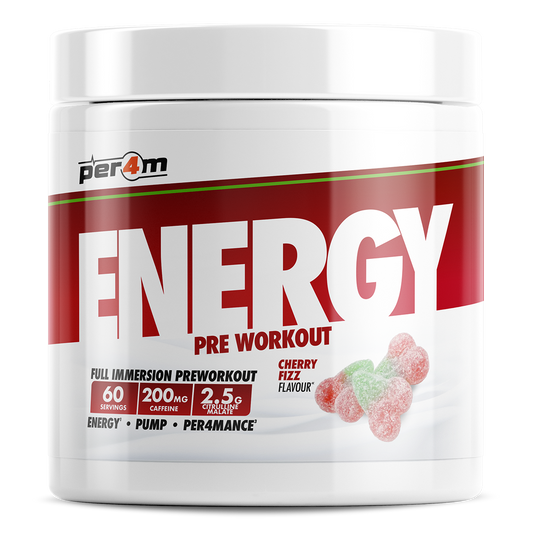
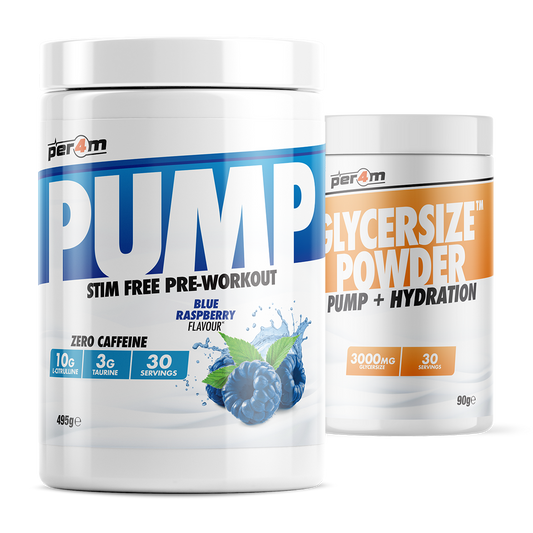
If you’re looking for a lower-stim pre-workout for everyday training, Per4m Energy is designed as a daily option when you find the full caffeinated experience too much (or want a break). If you want a totally stim-free pre-workout, Per4m Pump Stim Free is a pre-workout option without the caffeine.
Want a daily-driver pre-workout?
Per4m Energy is designed for sustained energy, focus and performance, with 200mg caffeine per serving. It’s the middle ground when you still want caffeine without reaching for the highest-stim option every session.
Taking a break from caffeine?
Per4m Pump Stim Free contains zero caffeine and is built around pump, focus and training performance, with Glycersize™ included separately with the tub.