Creatine has long been one of the most popular and well-researched sports supplements, but growing research interest suggests its story may extend beyond muscle performance.
Researchers are increasingly exploring creatine in relation to brain energy metabolism, mental fatigue, memory and cognitive performance – particularly in situations where energy demand is high.
The science around cognition is still developing, but it adds an interesting new dimension to an ingredient that already has a strong place in performance nutrition. Here’s what current creatine and brain-health research is showing, where the most interesting areas are developing and what it means for your daily creatine routine.
Benefits of creatine beyond the gym
Before getting into cognition, it helps to understand what creatine already does.
Creatine is naturally stored in your muscles, where it helps regenerate ATP – the body’s quick-access energy source – during short bursts of intense activity. That’s a major reason creatine monohydrate has become one of the most researched and widely used sports supplements.
But muscle isn’t the only tissue with high energy demands. The brain is one of the body’s most energy-demanding organs, which has led researchers to investigate whether the same creatine-phosphocreatine energy system could also be relevant to cognitive performance.
How may creatine support brain energy?
Brain cells rely on ATP for energy just as muscle cells do. Creatine contributes to an energy-buffering system involving phosphocreatine, which can help replenish ATP when energy demand increases.
A simple way to think about phosphocreatine is as a quickly available energy reserve. That mechanism is already highly relevant to physical performance, and researchers are now exploring what it may mean in an energy-demanding organ like the brain.

This is particularly interesting during periods of greater demand, including intense concentration, prolonged mental effort and sleep deprivation. Researchers are investigating whether increasing creatine availability may help support certain aspects of cognitive performance in these situations.
What does the latest research on creatine and cognition show?
The established performance benefits of creatine are already backed by a substantial body of research. The newer question is whether some of creatine’s energy-related effects may also have useful applications beyond muscle.
A 2026 meta-analysis published in Frontiers in Nutrition reviewed research into creatine and cognition and found evidence of modest benefits for certain aspects of cognitive performance in some circumstances. Researchers are continuing to build on that evidence as the field develops.
Current areas of interest include:
- Mental fatigue
- Memory and learning
- Brain energy metabolism
- Mental processing during demanding tasks
- Cognitive performance under stress or reduced sleep

The interesting part: newer brain and cognition research doesn’t replace the established case for creatine – it potentially expands our understanding of where the same energy-supporting system may be relevant.
Is there research on creatine and brain health?
Yes. Research has expanded from sports performance into cognition, brain energy metabolism and even clinical research settings.
Pilot studies and ongoing trials are investigating creatine in a range of populations and circumstances. Those studies help researchers understand the wider role of creatine in the brain, although clinical research shouldn’t be interpreted as evidence that creatine is a treatment for neurological conditions.
For the everyday creatine user, the more relevant point is that scientific interest in creatine is continuing to broaden well beyond the gym.
Creatine and sleep deprivation: what does the research say?
Sleep deprivation is one of the more interesting areas of current creatine research because lack of sleep places obvious demands on cognitive performance.
Early studies suggest creatine supplementation may help support some aspects of cognitive performance or mental fatigue when people are sleep deprived.
One theory is that reduced sleep creates a situation where meeting the brain’s energy demands becomes more challenging. Because creatine has an established role in cellular energy availability, researchers are investigating whether greater creatine stores may provide useful support under those conditions.
Good sleep still remains one of the foundations of recovery, performance and cognition. What makes this research interesting is the possibility that creatine’s energy role could become particularly relevant when demand is unusually high.
What does research say about creatine and mental fatigue?
Mental fatigue isn’t quite the same as feeling sleepy. It describes the drop in focus, motivation or concentration that can happen after long periods of demanding cognitive work.
Some studies suggest creatine may help maintain aspects of cognitive performance during mentally demanding tasks. Results vary between studies and populations, but the signal is interesting enough that mental fatigue continues to be an active area of creatine research.
That fits with the wider question researchers are trying to answer: if creatine helps support rapid cellular energy availability, could that become particularly useful when the brain is working harder than usual?
What does creatine brain-health research mean in practice?
The practical takeaway is simpler than many of the headlines make it sound.
Creatine already has a well-established reason to be part of a performance-focused supplement routine. The newer cognition research adds another layer of interest by exploring whether the same energy-supporting role may also be relevant to the brain.
You don’t need to treat creatine as a separate “brain supplement” to find that research interesting. If you already use creatine consistently for training, you’re already following the same basic approach being investigated across many of these newer areas.
One supplement, an expanding research story
Physical performance remains the established reason most people take creatine. Brain energy, mental fatigue and cognition are increasingly interesting additional areas of research.
If you have persistent memory problems or neurological symptoms, those should be discussed with an appropriate healthcare professional rather than self-treated with supplements.
How should you take creatine for brain health?
You don’t currently need a separate creatine protocol because you’re interested in the cognition research.
The practical approach remains the same: take creatine consistently. The same daily habit already used for sports performance is also the approach commonly seen in creatine research.
If you already take creatine for training, there’s no reason to completely rethink your routine because of the newer brain-health research. Our guide to creatine dosage, timing and common myths covers the fundamentals in more detail.
Already considering creatine?
There’s no need to overcomplicate it. Choose a creatine format that fits your routine, take it consistently and let the emerging research be an additional reason to stay interested in an already well-established supplement.
What should you take from the current creatine evidence?
The creatine story is getting broader.
Its role in high-intensity physical performance is already well established, while researchers are increasingly investigating brain energy, memory, mental fatigue and performance under demanding conditions.
That makes the newer research an interesting addition to creatine’s existing credentials rather than a reason to reinvent how the supplement is used.
If you already take creatine as part of your training routine, consistency remains the priority. And if you’ve been thinking about adding creatine, you can choose the format that best fits how you actually like to take supplements.
Which Per4m creatine format fits your routine?
You don’t need a special type of creatine because you’re interested in cognition research. What matters practically is choosing a format that you’ll find easy to keep in your routine.

Micronised Creatine
Classic powder format
A straightforward option if you want traditional unflavoured creatine that can easily fit around your existing drinks and supplements.

Flavoured Creatine
For people who prefer a flavoured drink
A more flavour-led way to build creatine into your daily routine without changing the fundamental habit of consistent use.

Creatine Gummies
Chewable and convenient
A practical choice if powders and shakers aren’t your thing and you prefer a creatine format that’s easy to work into the day.

Creatine Sherbet
A different no-mixing format
A more distinctive way to take creatine if you want something different from a traditional powder-and-water routine.

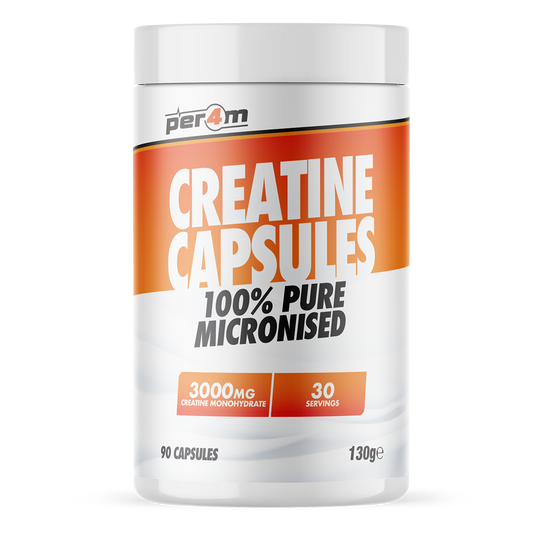
Creatine Capsules
No scoop or shaker required
A simple capsule option for anyone who prefers their supplements measured and easy to take as part of an existing routine.
The best creatine format? The one you’ll actually keep taking.
Powder, flavoured creatine, gummies, sherbet and capsules all give you different ways to make creatine fit your preferences. Choose the format that makes consistency easiest for you.